The Eudist Archives
The Eudists have contributed to the social and cultural development of the communities in which they served. They played a central role in the social, economic, and cultural development of Quebec and Acadia. They witnessed life in Canada and the United States, as the archives they accumulated over the years attest. Systematic cataloguing of our archival records began in 1958 under Eudist Father Basile Babin. Here is how Father Babin described what would become the first Eudist archives:
“Let us mention in passing an aspect of the persecution that is rarely reported by history, although it recurs constantly in the correspondence of 1902–1903. Faced with the threat that the government would seize the religious communities’ property, the Eudists took the precaution of sending to Halifax as much as they could of the precious library collections from their colleges, including Redon, Kerlois, and Angers, along with liturgical vestments and church linens. At the end of November 1902, 90 well-filled crates crossed the Atlantic at once. A few days later, the General Treasurer, Father Roussel, wrote to Father Lecourtois in Halifax: “You are going to receive about a hundred crates. Your libraries will be enriched by what we have lost. What brings misfortune to some brings good fortune to others.” The books were divided among the houses in Halifax, Pointe-de-l’Église, and Caraquet. The collection included priceless old volumes, most dating from the 17th century or earlier. Caraquet lost its repository in the 1915 fire.”
Basile J. Babin, Entre le marteau et l’enclume: Pierre-Marie Dagnaud, à la Pointe de l’Église, Nouvelle-Écosse, 1899–1908, Charlesbourg, Maison des Eudistes, 1982, p. 226.
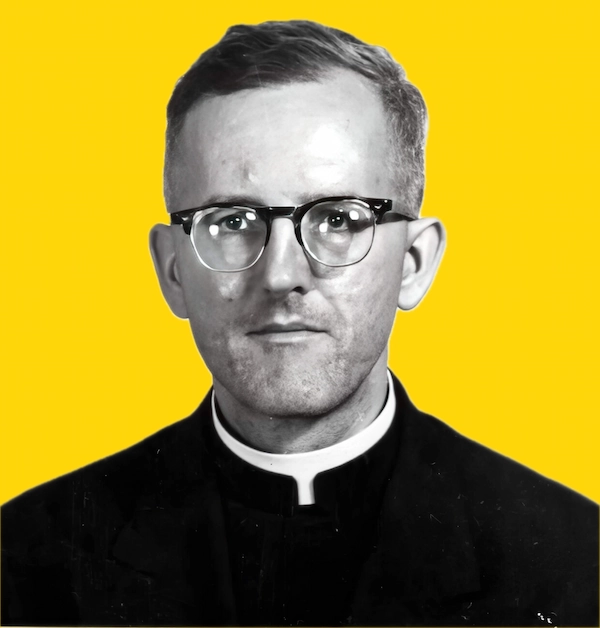
Basile J. Babin, C.J.M.
Jules-Joseph-Basile Babin was born on June 14, 1914, to Nicolas-Alfred Babin and Marie-Elizabeth Bourque. Basile Babin was ordained to the priesthood on February 26, 1939, by Bishop Omer Plante, Auxiliary Bishop of Quebec. He spent his first 14 years as a priest at the Externat classique Saint-Jean-Eudes in Quebec City. In 1949, he earned a degree in library science from Université Laval to better fulfil the duties of librarian entrusted to him. Recognizing his archival skills, his superiors sent him to Europe to organize the Canadian Eudist archives held in Paris and Rome. Although the assignment lasted only two years (1955–57), it set him on the path he would follow for the final 25 years of his life: archivist for the North American Province. Father Basile Babin, who had cancer, died on September 9, 1984. An experienced archivist and author of several works, Father Babin is best known for his final publication, Between Hammer and Anvil. Source: MG 15-15, Father Basile Babin fonds.
During a two-year stay in France (1955–1957), Father Babin researched the French National Archives and the Eudists’ General Archives in Paris, and made copies of hundreds of documents related to our history. He later gathered, from our North American houses, the available documents about the history of our works and the activities of our confreres. Until his death in 1984, Father Babin collected and catalogued a rich body of material. Father Jacques Custeau succeeded him that same year as coordinator of the Provincial Archives Service and held the position until his death in 1997. In 1987, archivist Sonia Chassé, who had worked with him as a consultant, published “General Inventory of the Fonds and Collections of the Provincial Archives of the Eudist Fathers” as well as a detailed finding aid for several fonds. Building on Father Babin’s work, she brought it into line with archival standards and developed a valuable classification plan that is now helping to computerize the records. Thousands of additional items have been added to the fonds since Ms. Chassé published these two research tools. The work therefore needed to be updated, and new finding aids created. From 1989 to 1997, interns from Université Laval’s archival studies program provided valuable help in processing the fonds. From 1997 to 2014, Father André Samson, C.J.M., took over as coordinator of the Archives Service at the Eudist House in Charlesbourg. Father Renaud Côté, C.J.M., then began classifying and digitizing records in preparation for the archives’ move. Our archival repository contains three groups of written records: the personal fonds of deceased confreres; the fonds of our institutions, including colleges, parishes, and seminaries; and administrative records produced by the General and Provincial administrations.
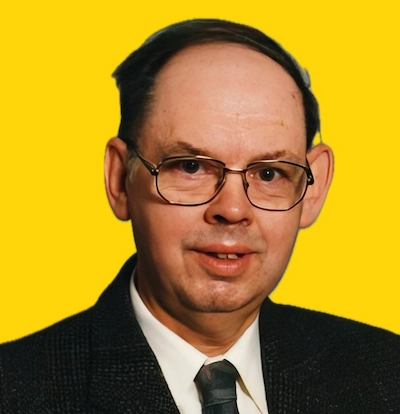
André Samson, C.J.M.
Father Samson completed his classical studies at the Jesuit College in Quebec City and went on to earn a doctorate in philosophy at Université Laval (1966). In September 1965, he entered the Eudist novitiate in Charlesbourg. From 1966 to 1970, he studied theology at the Seminary of Limbour in Gatineau. He was incorporated into the Congregation on October 5, 1969, and ordained a priest on February 20, 1970. In 1970, he became a philosophy professor at St. Louis College in Edmundston, New Brunswick, where he taught until 1974. That year, he was appointed vicar of the Sacred Heart parish in Chicoutimi while also serving as bursar from 1982 to 1989. In 1989, he joined the Eudist Provincial House as archivist, liturgy coordinator, a member of the Information magazine team, and secretary of the Provincial Council.
Before the Big Move
In 2015, the archives room at the Eudist House in Charlesbourg was about the same size as the chapel. It held administrative records, the files of all French and Canadian priests who had worked in Canada since the foundation, records from every house that had closed, and thousands of images, including an impressive glass-plate photo collection by Father Joseph Courtois, now held at the Bibliothèque de l’Université Laval in Quebec City. The archives had once been managed with a computerized database, later replaced by paper catalogues created with a word processor. Biographical records about the priests were maintained in dedicated software. Thousands of microfilms were also produced before digital technology made that process possible. Many rare books were kept in proper environmental conditions. These included the first edition of Bérulle’s complete works, a little-known pirated edition of The Kingdom of Jesus absent from Father Lebrun’s list, another edition of The Good Confessor, and several rare books sent to Canada after the expulsion from France in 1903. Researchers consulted the archives in person or by requesting material by email.
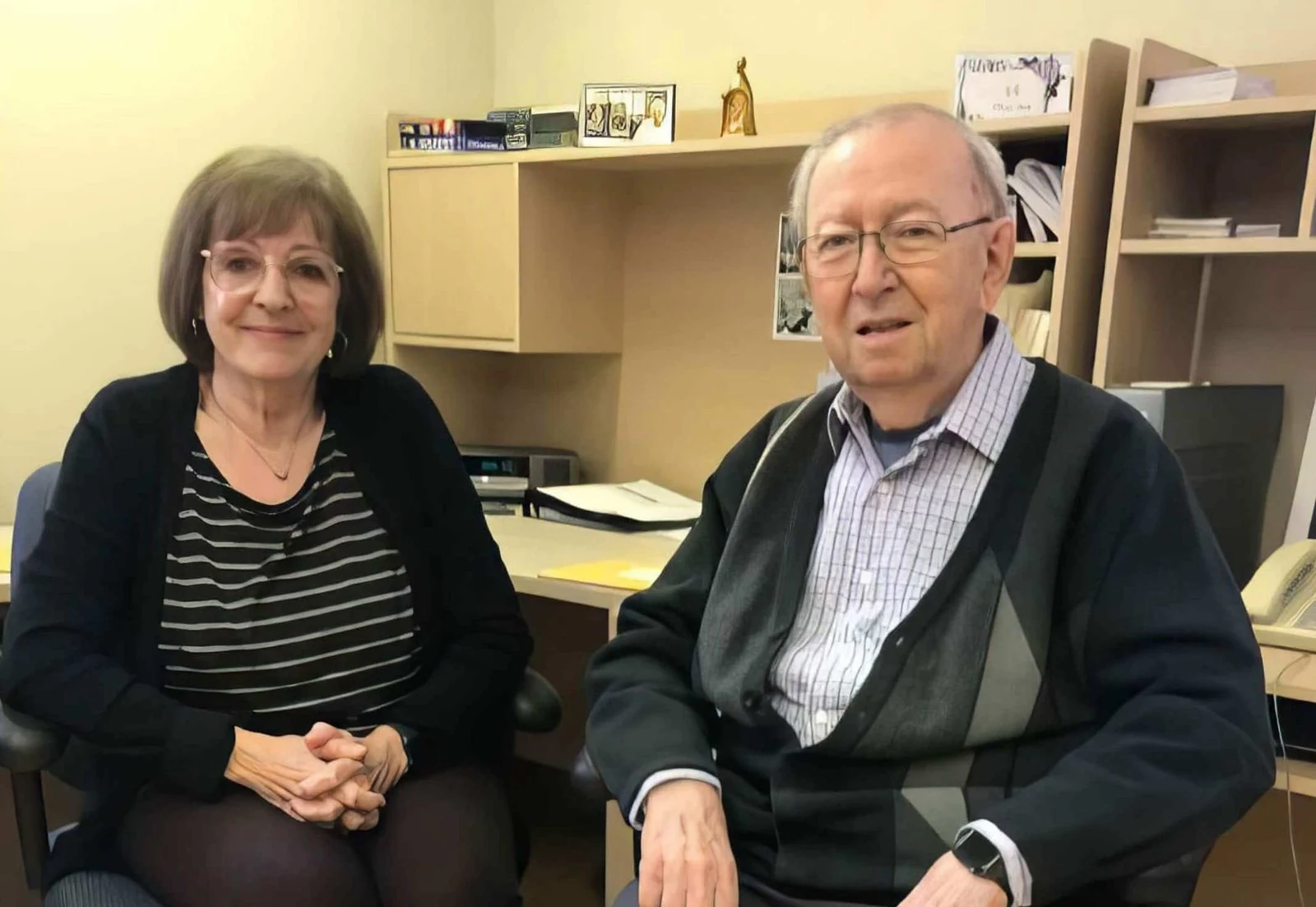
Ms. Michelle Gauthier and Father Renaud Côté
Preparing for the Move
As the Eudist House in Charlesbourg prepared to move, Father Gilles Ouellet coordinated the digitization of all the archival records. Michelle Gauthier, an Eudist associate, and Roland Boisvert, C.J.M., assisted Father Renaud Côté with this monumental task. Father Côté created digital folders for each priest and institution and defined the required fonds structure. Every document was then digitized and filed in the appropriate folder. Each file was renamed to describe its contents. The covers of the rare books were also digitized to preserve a record of them.
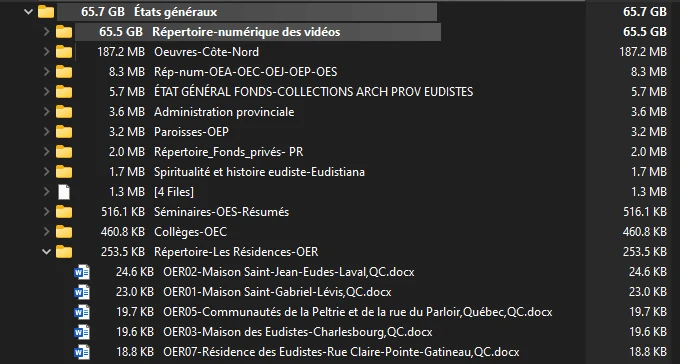
Files and classification prepared by Father Renaud Côté
Father Ouellet also had to find new homes for all the physical records. Many institutions were approached about storing them. Université Laval, which received the rare books, and the Provincial Archives of New Brunswick completed the cataloguing and digitization of the materials entrusted to them, and now preserve those records.
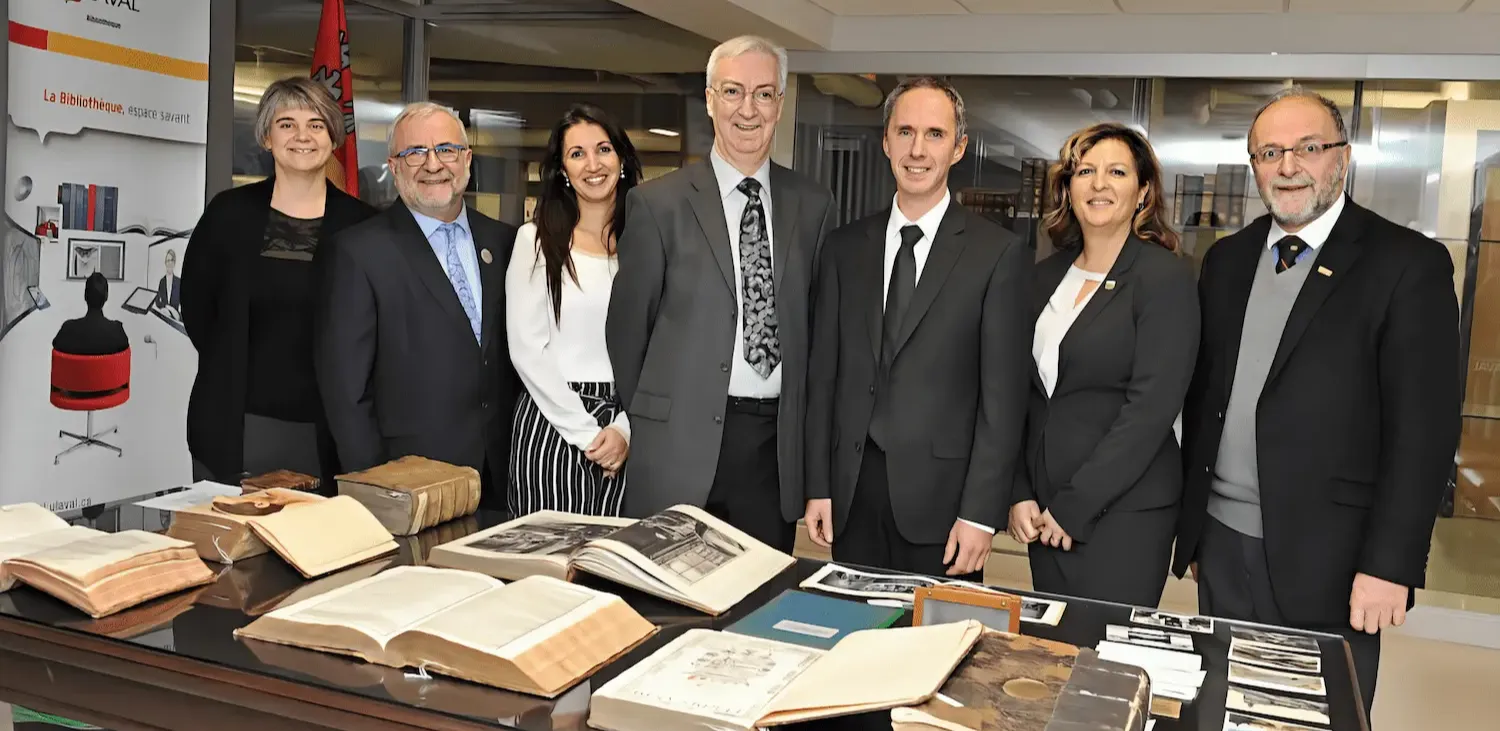
Gift of rare books to Université Laval · Photo: Marc Robitaille

Diane Perron, Archives Associate
Eudist associate Diane Perron has worked on the archives since 2021. She has also helped standardize the data, match records with the files of Eudist priests, and decipher thousands of documents. A craftsperson by nature and Indigenous at heart, Diane has many talents. Originally from Charlevoix, she spent many years on the North Shore and knew personally, for more than 30 years, the Eudists who served there. She is a valuable asset to our work.
Giving the Archives a New Life
Father Renaud’s team did essential work. Digitization and initial cataloguing safeguarded the records by preserving copies of the originals. When the permanent archivist position ended, a new strategy was developed to meet researchers’ immediate needs and to honour the call to preserve memory issued by Eudist Superior General Jean-Michel Amouriaux. Meeting these goals required overcoming several challenges.
Some documents are illegible or obsolete
Restoring and Standardizing File Formats
Many records in the archives were created with software that is now obsolete. Researchers cannot be expected to install old versions of WordPerfect just to access them. Five percent of the recovered files also proved unreadable or corrupted. We therefore developed an application to restore the files and standardize them in Word and PDF formats.
Files are oversized, and documents are often image-only
Compression and Optical Character Recognition
To share files over a network, they must be easy to download. The New Brunswick files proved too large and contained only images, even when the pages appeared to include text. Optical character recognition has largely resolved this problem.
From a file hierarchy to a cloud-based solution
Building a Database
A relational database was needed to hold all the archival information. Data had to be recovered from older software, including biographical records of the priests, and links established between documents and finding aids. This would make it possible to search by subject, author, institution, college, or fonds. File names contain useful information, but a database requires consistency. Titles and numbering will also be standardized to make searching easier.
Securing the data and building a management platform
Creating the Corde Magno Console
Directly manipulating data in a file hierarchy can create security problems. It is slow and lacks the features needed to connect finding aids. Sharing a search is difficult because the structure cannot be printed. The Corde Magno Console makes data management more efficient and greatly expands what can be done with the collections. Building the Console required 80,000 lines of code.
Searching by file name is not enough
Creating a Full-Text Search Tool
Full-text search finds a word or phrase anywhere in a document. An artificial intelligence application was integrated to extract keywords in French and English, making it possible to ignore articles and filler words. Our full-text search can now scan the keywords of more than 30,000 documents, each of which may contain hundreds of pages, in just seconds.
Correcting typing errors
Creating Fuzzy Search
In an ideal world, we would always know the correct spelling of a word. That is not always the case. Many documents have been digitized, and the text recognition process does not interpret every image perfectly, so a search can miss what is there. We therefore developed a fuzzy-search algorithm that uses a probability score.
Files whose contents leave something to be desired
Generating Thumbnails to Preview Documents
Instead of opening every document to check its contents, the Corde Magno Console automatically generates thumbnails. This feature required a dedicated development effort.
Images that are poorly framed, faded, or blurry
AI-Assisted Cropping, Colour Correction, and Deblurring
More than 22,000 photos were individually cropped and colour-corrected. Photographs taken in the 1970s have often lost their original colours. Faces can also be difficult to distinguish in old photographs. Artificial intelligence helped improve image quality and bring faces into view.
Who will have access to the archives?
Creating a Public App
All this work needed to be made available. We believe the archives should be open to everyone, not only researchers. The Eudist archives are an important part of the history of many communities in North America. We therefore expanded the Corde Magno application, now available in the Apple App Store and Google Play, for use on phones and tablets.
A glimpse of the future
Artificial Intelligence
In the near future, an AI interface with a conversational assistant could help people find information in the archives. Audio and video could automatically generate text and summaries. Handwritten documents could be analyzed and transcribed. The application could also include a voice interface.