Eudist missionary · Godbout · 1896–1960
A Mission in the Logging Camps
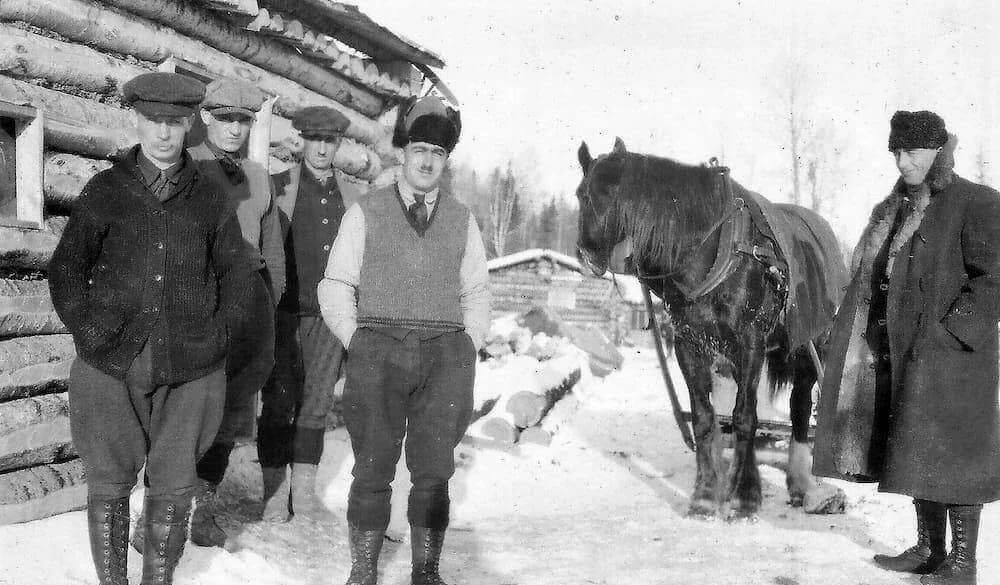
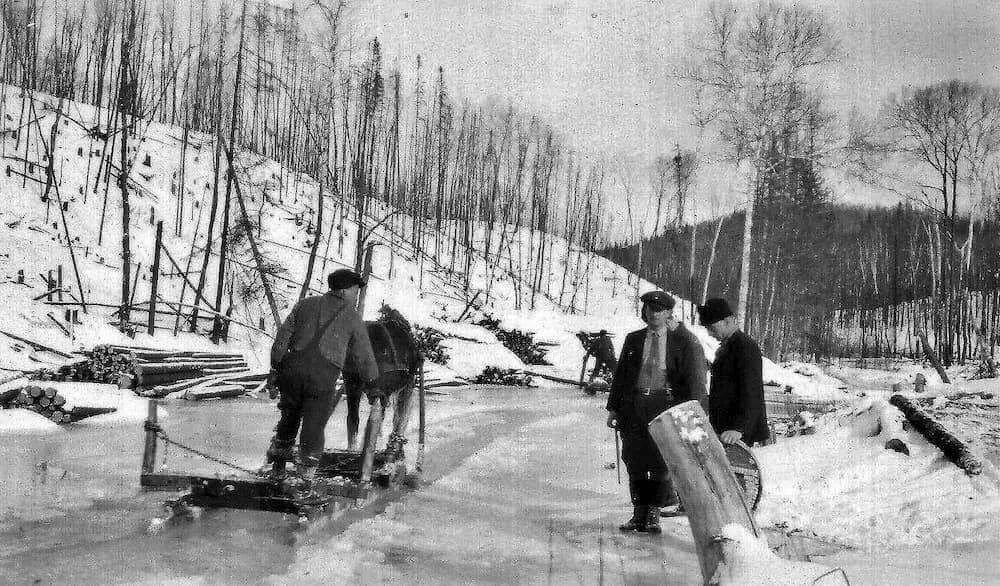
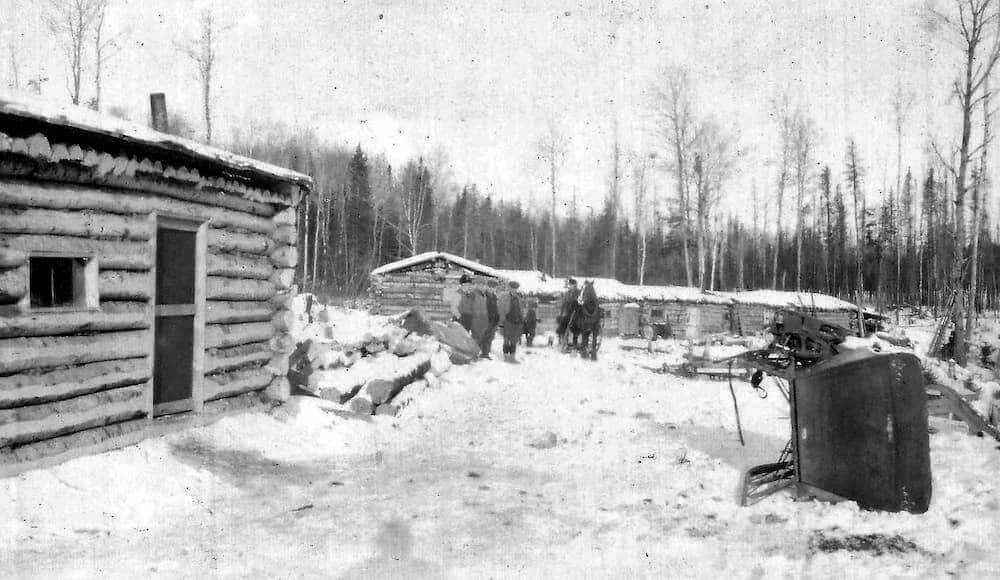
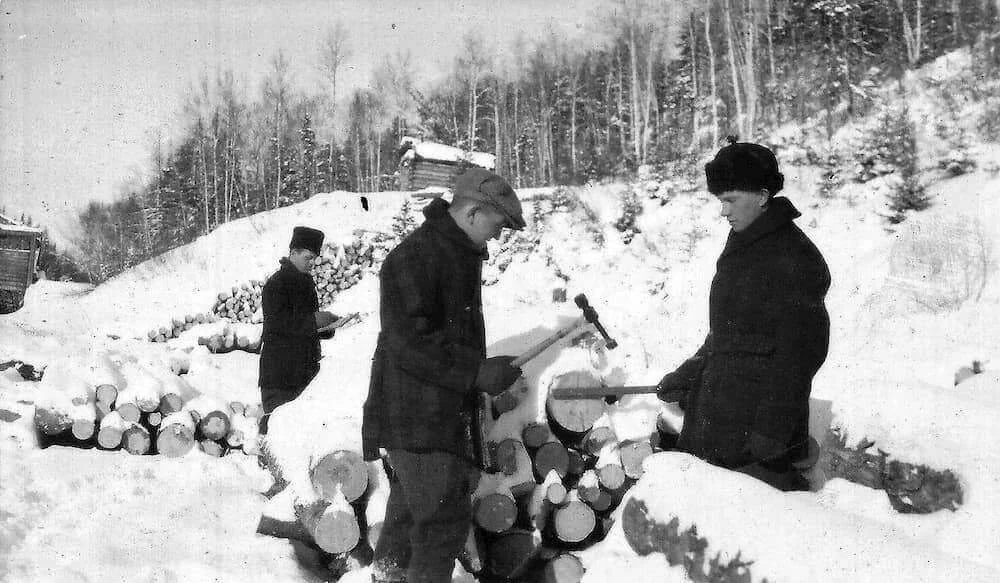
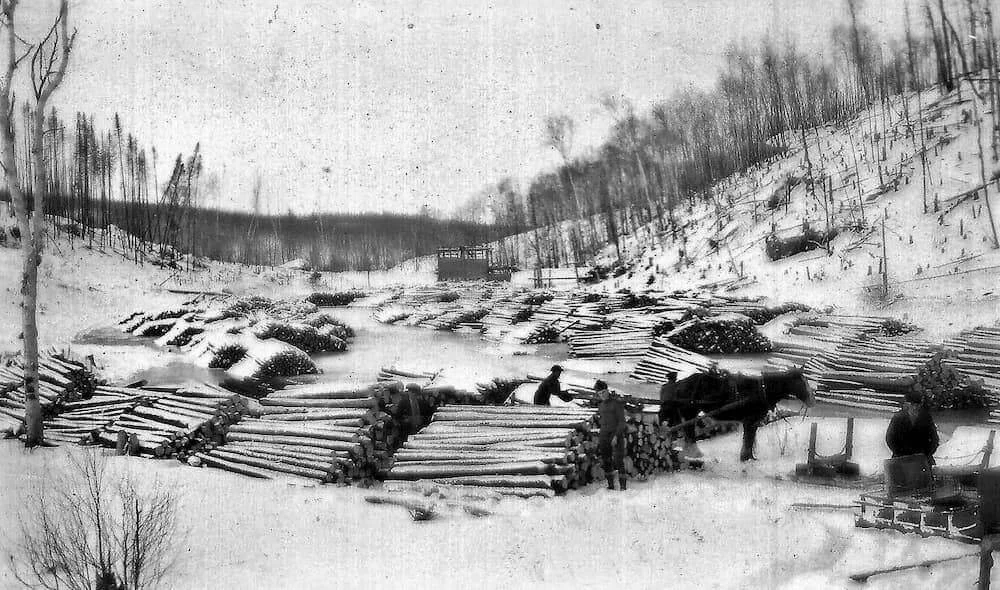
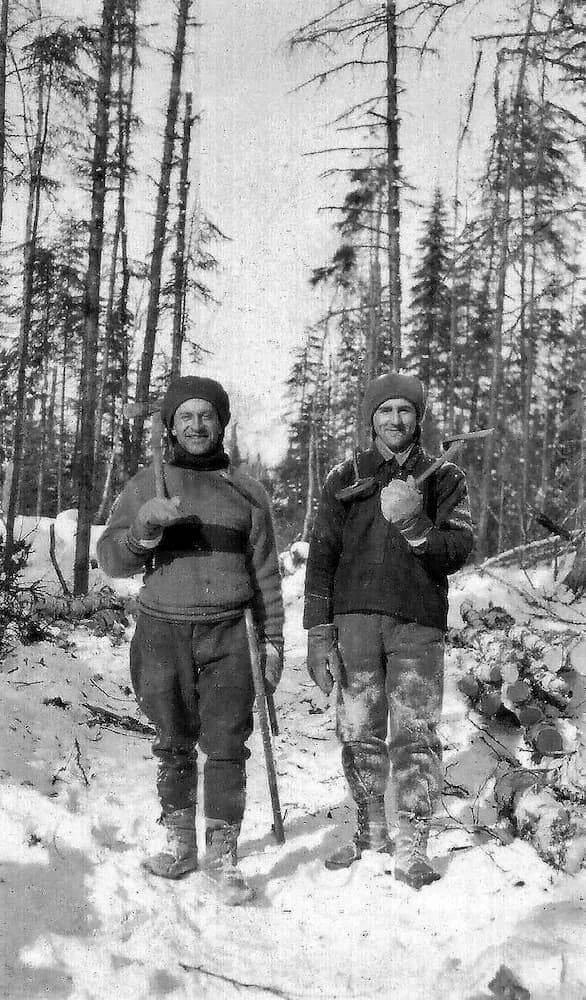
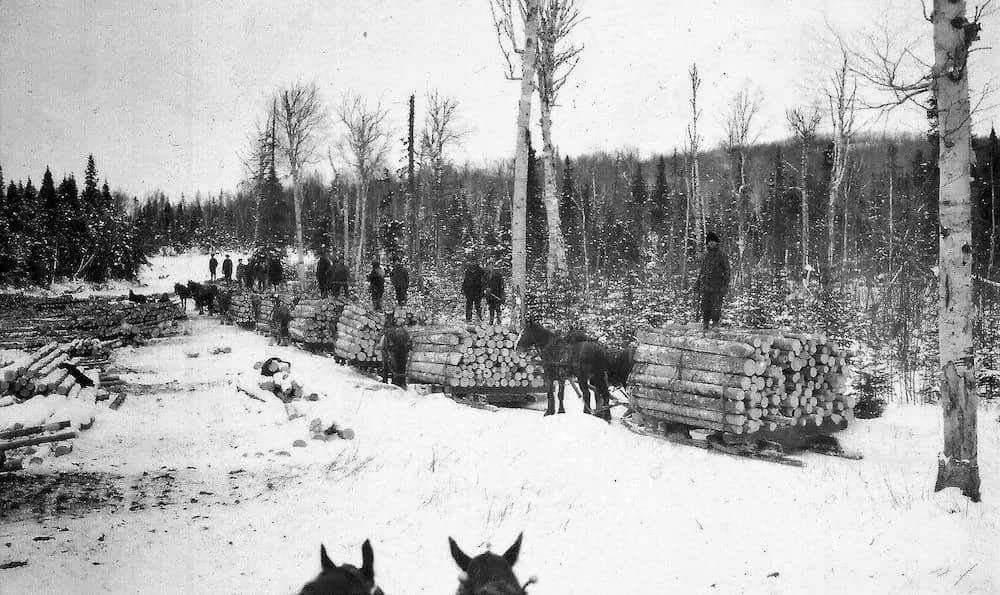
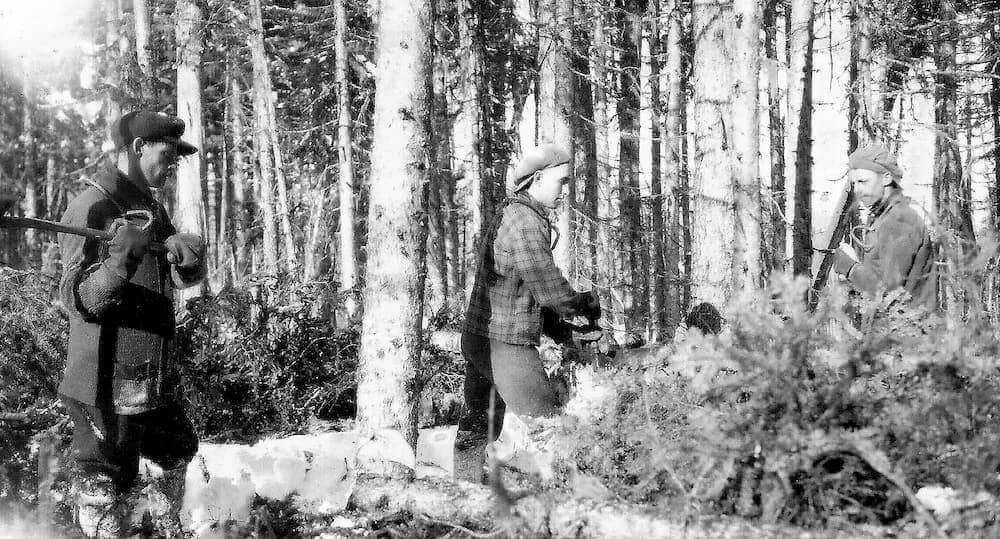
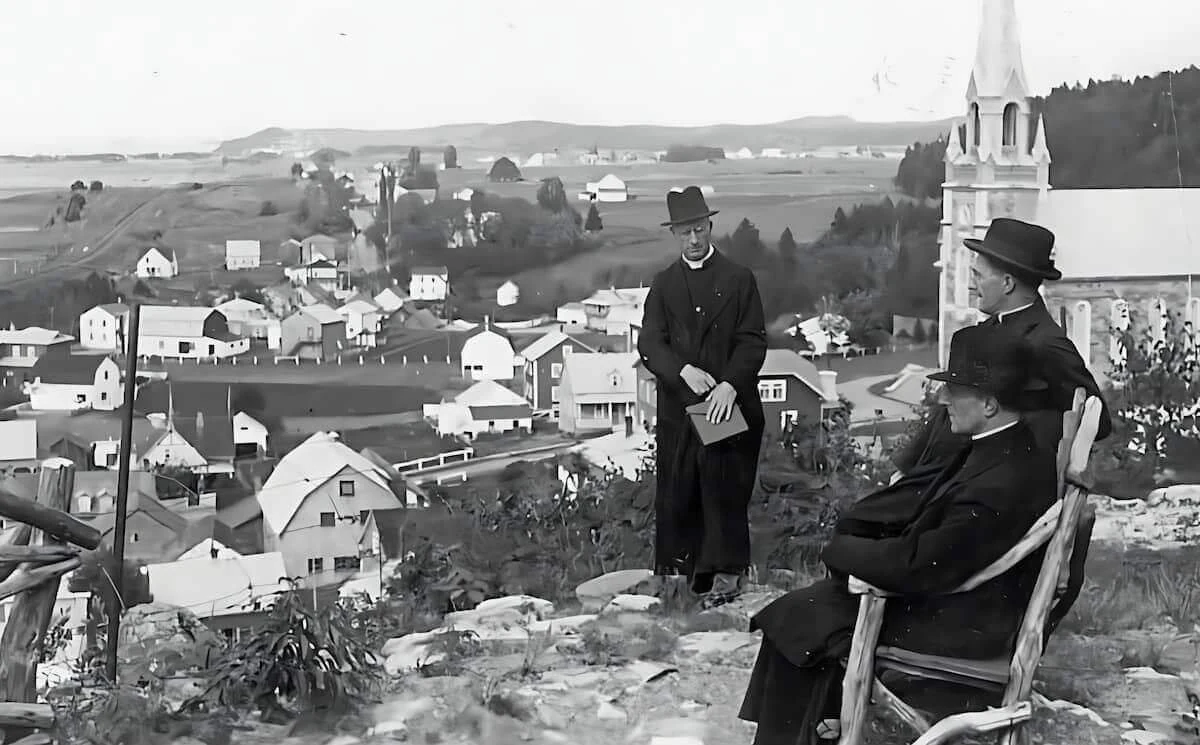
In the winter of 1932–1933, Father Lucien Bourque set out on a missionary tour among the logging workers of the North Shore.
Having served two terms as pastor of Sainte-Anne in Godbout, he recounts preparing for his journey and his missionary life in the camps of the Apostolic Vicariate of the Gulf of Saint Lawrence.
Read the excerpt ↓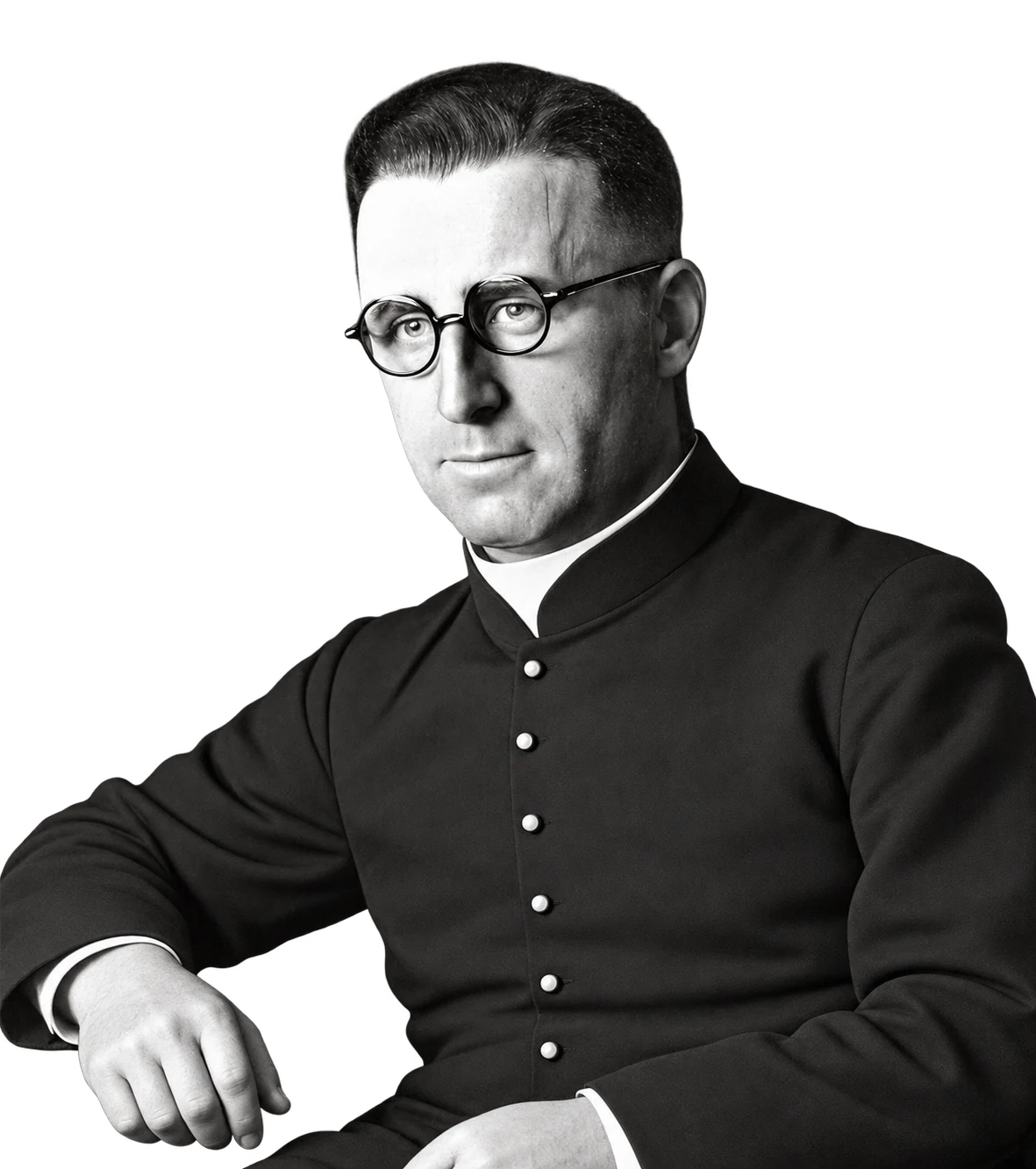
December 11, 1932 – January 23, 1933
Setting out for the “woods”
Lucien Bourque’s account follows five stages: preparations, departure, arrival in the camps, the mission, and the return. The excerpt below is translated from the version preserved in the archives.
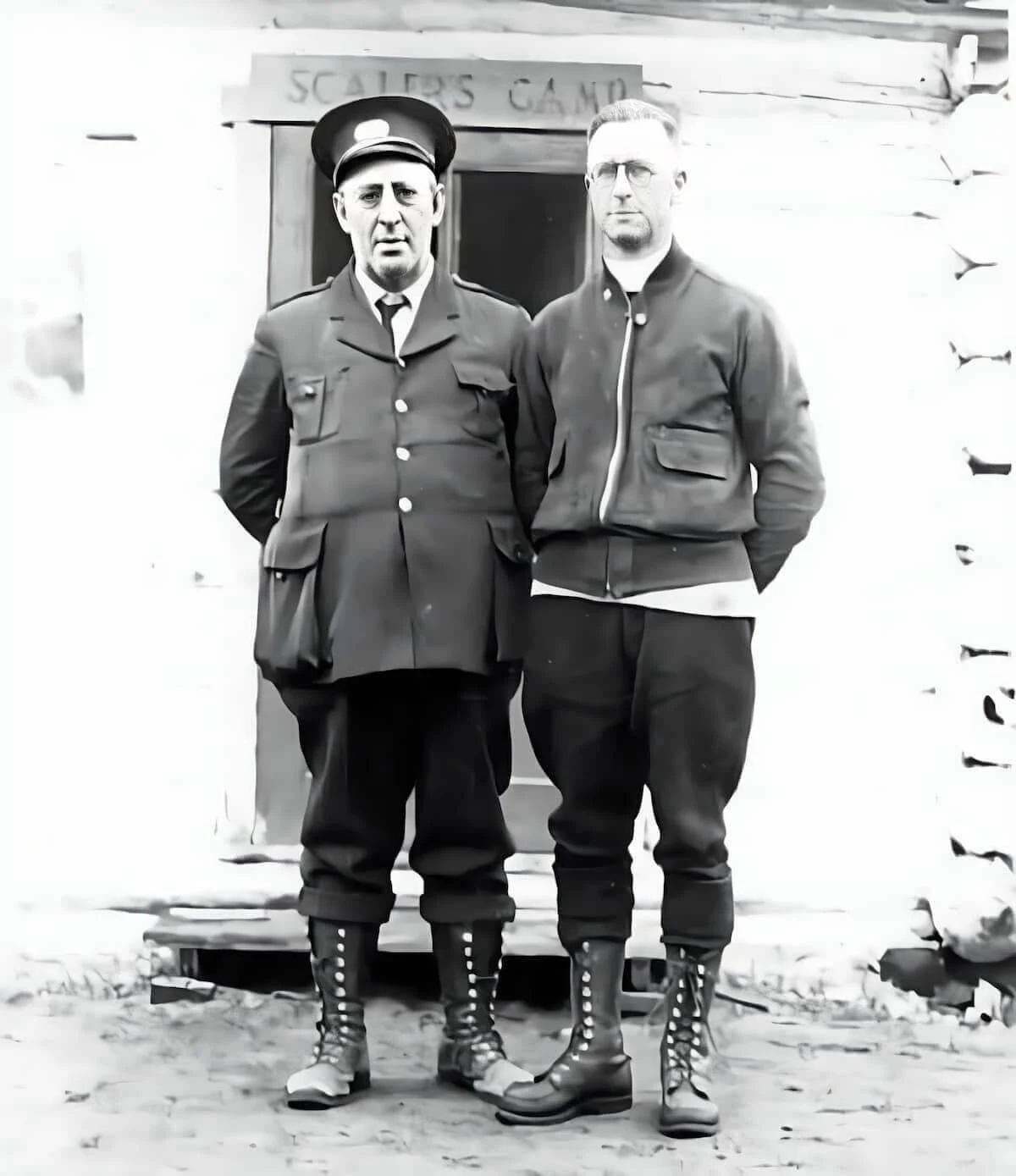
From December 11, 1932 to January 23, 1933
Last November, during his canonical visitation to Godbout, in Saguenay County, Quebec, the Very Reverend Father François Tressel, Provincial Superior of the Eudists, said to me without warning: “My dear Father, you should write an account of one of your missions in the logging camps.”
At first, I thought the Very Reverend Father was joking. But when I saw Father Tressel return to the subject, I answered simply: “To comply with your reasonable request, I will try to write one during this winter.”
Read the rest of the excerpt
And so, without further preamble, here I am, already trusting that my readers will be most indulgent if my style is not as polished as it should be, or if my descriptions sometimes lack local color. In this account, I will simply tell you what a MISSION in the logging camps involves, along with, of course, its most notable events.
In writing these lines, my only aim is to lift, just a little, the veil that hides from view the somewhat monotonous, harsh, and austere life of those who, amid snow and ice, show truly apostolic zeal and devotion in their assigned fields of work in the Apostolic Vicariate of the Gulf of Saint Lawrence, Quebec.
If you agree, we will divide the account into five chapters: preparations for departure, the departure itself, arrival in the lumber camps, the mission proper, and finally the return after the mission.
It is December 11, 1932. The final stroke of the bell in my humble little chapel has just sounded, calling all the parish faithful to Sunday high Mass.
After carefully writing down everything I had to announce from the pulpit that day, I went to the sacristy. The altar servers and attendants were waiting in complete silence. Everything was ready for the divine office. You should have heard the enthusiasm with which the Mass’s “GAUDETE IN DOMINO” was sung. It was as if the joy in the singers’ voices came from a foretaste of the beautiful Christmas feast we were soon to celebrate. The Mass’s collect was perfectly suited to the day. How fervently I asked the Lord, almighty God, to hear my humble prayers. With all my heart, I asked God to give me the strength I would need and help me by his divine power, so that I might bring as many sheep as possible back to the Good Shepherd’s fold, while showing the greatest patience toward the most reluctant.
A new John the Baptist! How many roads I myself would have to prepare, how many paths to make straight and valleys to fill in as I ventured into the forest. These lumberjacks, in their fourth month in the woods, must sometimes have felt a great emptiness in their hearts and souls, despite the fine promises they had made to their mothers when they left.
During the announcements at high Mass, as I did each year on such an occasion, I announced my departure for the logging-camp mission. I urged my good parishioners to unite their prayers with mine so that my apostolate might bear as much fruit as possible. Since I had to leave after dinner, Benediction of the Most Blessed Sacrament would take place after high Mass. During my thanksgiving, I repeated to Jesus the requests I had made in my morning meditation and asked him to bless my mission. I begged the Blessed Virgin to take me under her maternal protection and my Guardian Angel to guide my steps. Then I returned to the rectory for a light meal.
I had barely finished my modest meal when my guide told me everything was ready for departure. “Give me a few minutes,” I said, “to check all my ‘baggage’ and make sure I have forgotten nothing.” It is always troublesome to discover, once you are a hundred miles into the woods, that you have forgotten something essential for the mission.
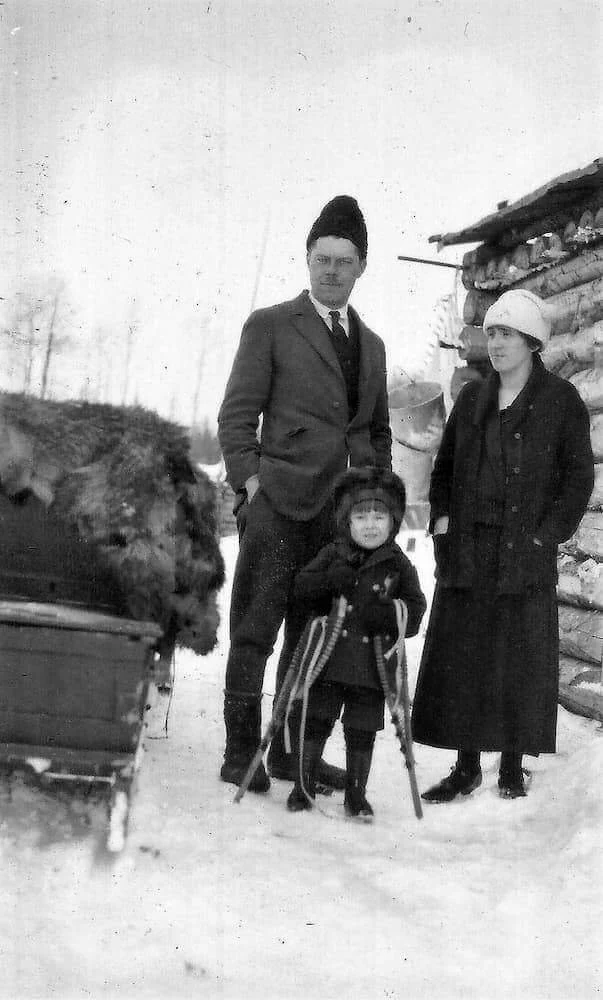
If you do not believe me, ask the Reverend Father Alfred Poulin, who, once he reached the woods, discovered to his great regret that he had forgotten to bring the wine for Mass. My companion had carefully arranged everything in the “PORTAGE” sled: a portable altar with all the necessary items, a sleeping bag that would serve as our seat, a travel bag with toiletries, and another seven or eight hundred rosaries and scapular medals, since I was leaving for two weeks.
Since one should combine business with pleasure on such an occasion, I made sure to slip my “KODAK” and “CINÉKODAK” into the bottom of my travel bag so I could bring back a few memories of the MISSION. When I mention eight hundred rosaries and medals, I can see a sly little smile on some faces. Do not worry: I forgot to say at the outset that on this visit to the camps I was to see more than eight hundred men, and that during a mission everyone likes to have a small memento—some a rosary, some a medal, and sometimes both.
After the customary prayers before the Blessed Sacrament, entrusting my mission to Jesus one last time, I took my place beside my guide, and off we went to the “WOODS.”
Lucien Bourque, C.J.M.
Traditional song
Youpe! Youpe! Sur la rivière!
performed by Charles Marchand and his Troubadours of Bytown
One Sunday evening, as I went out for a walk
[Octave] and I went together,
At old [Joe Cormier]’s place, we went to spend the evening,
I’ll tell you what happened to me.
Read by Alain Jourdain
Listen to the excerpt
Video
The song in pictures
“Youpe! Youpe! On the River!” — Charles Marchand and his Troubadours of Bytown.
From the Eudist Archives
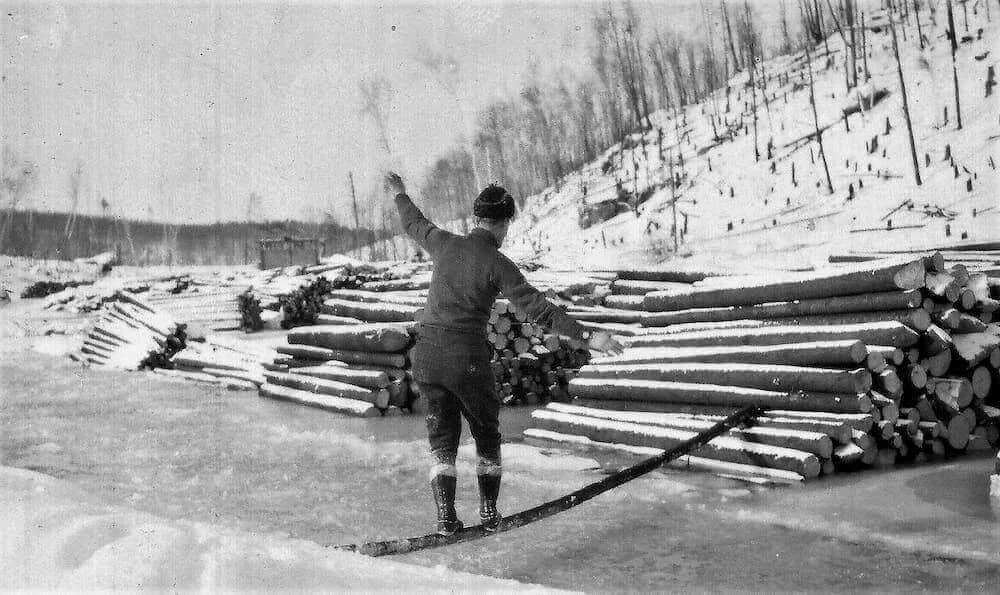
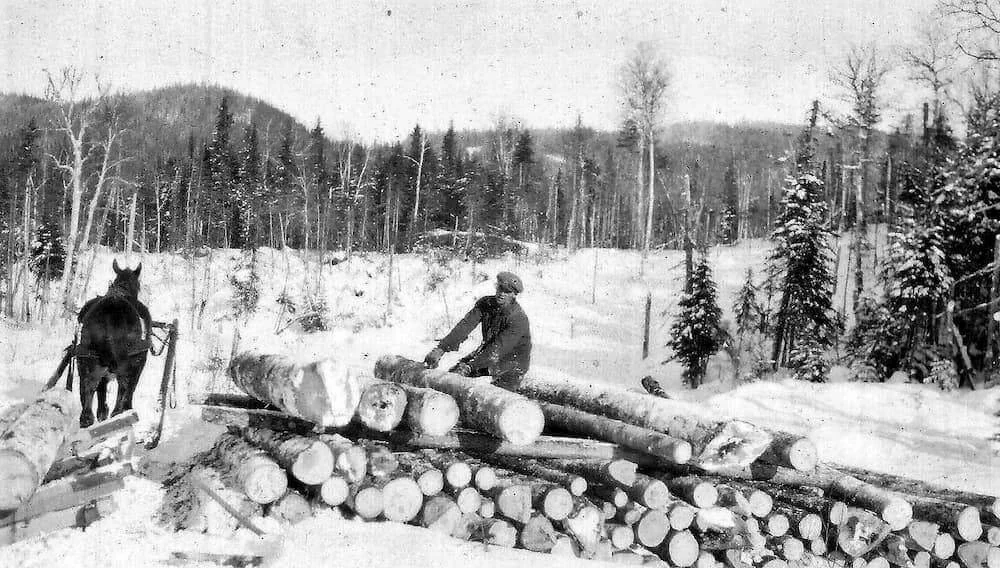
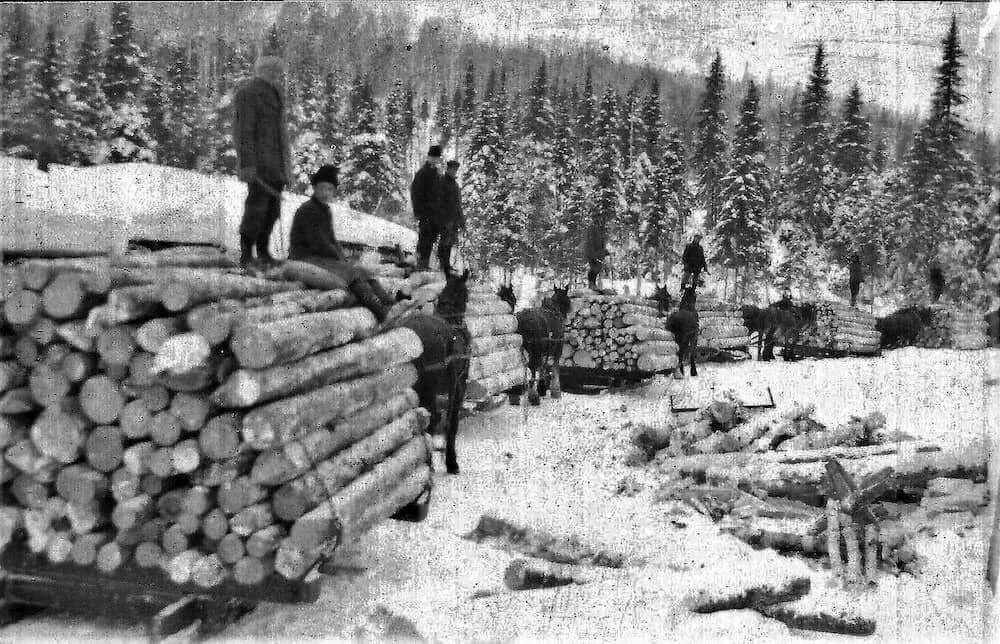
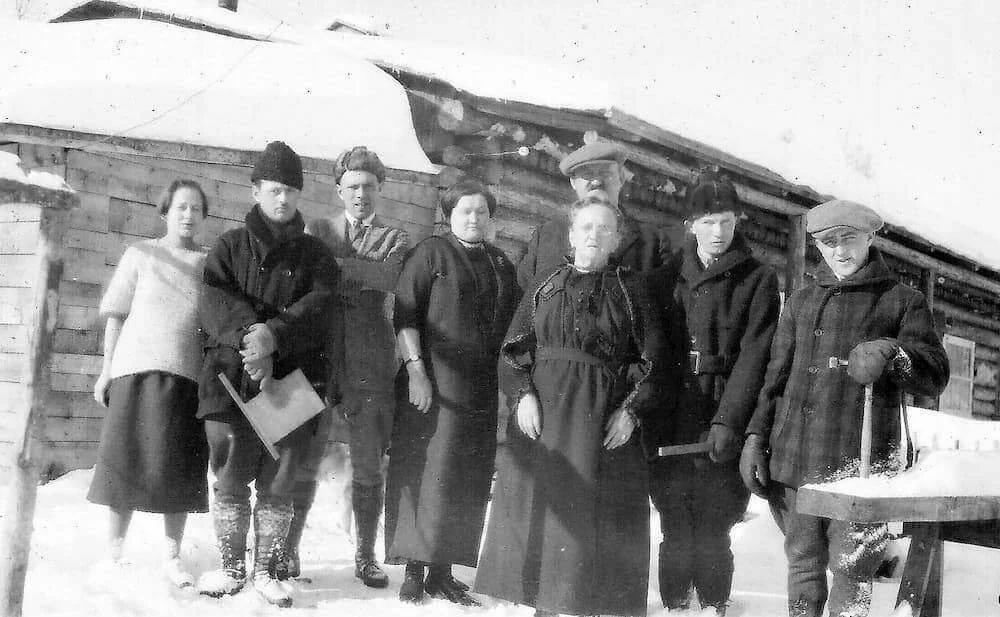
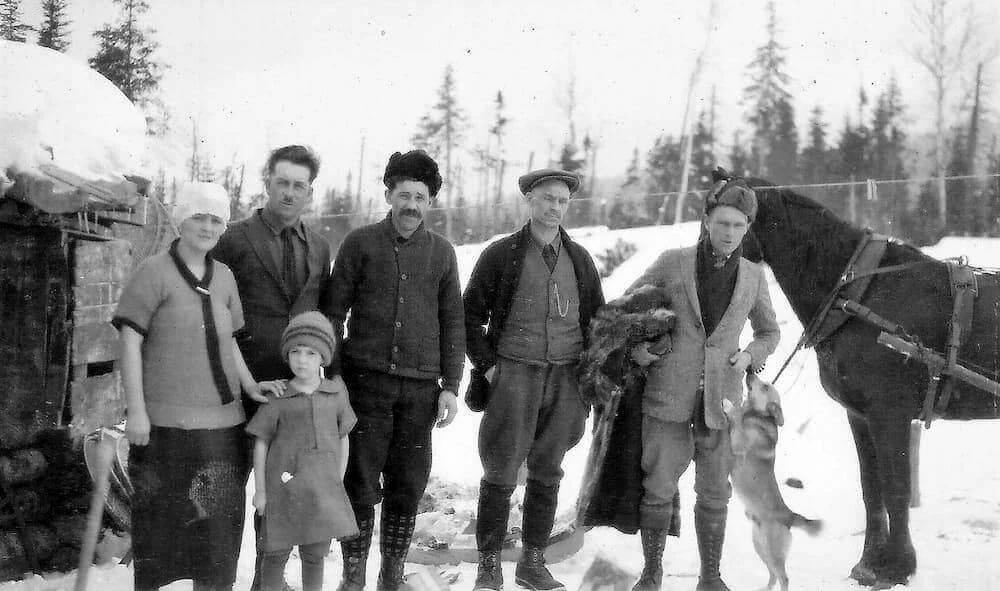
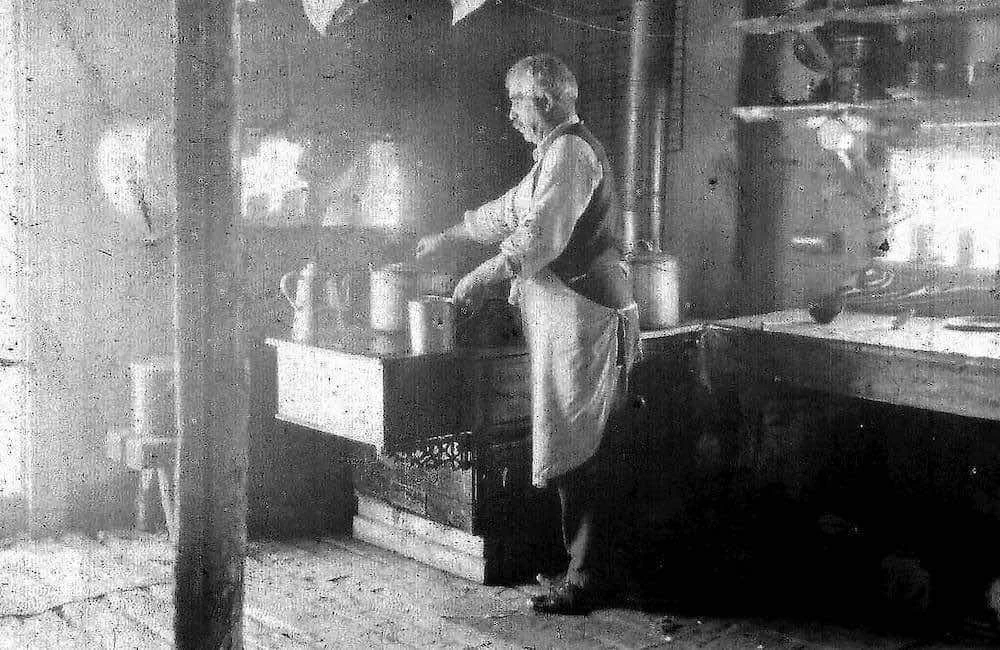
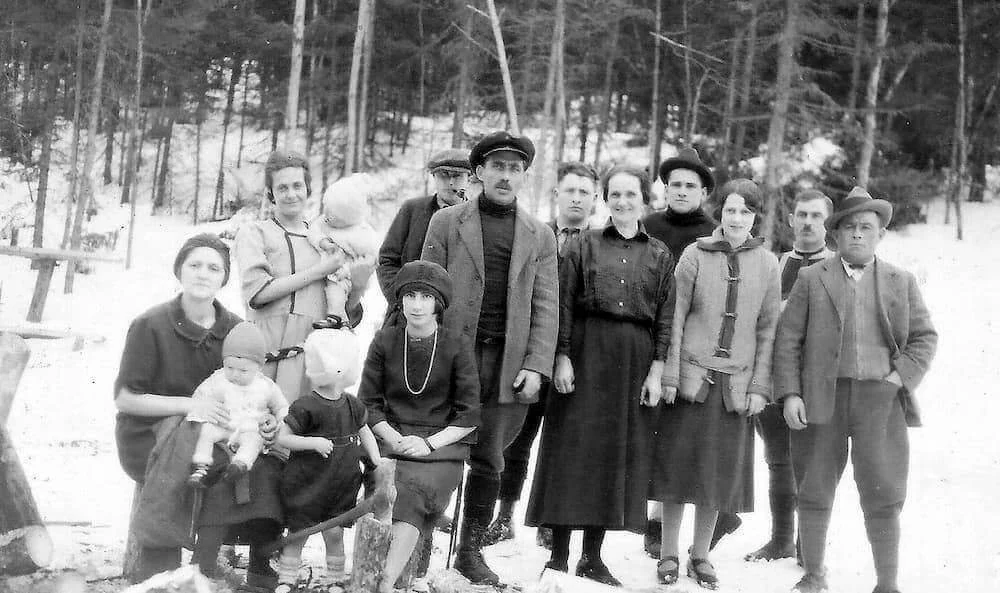
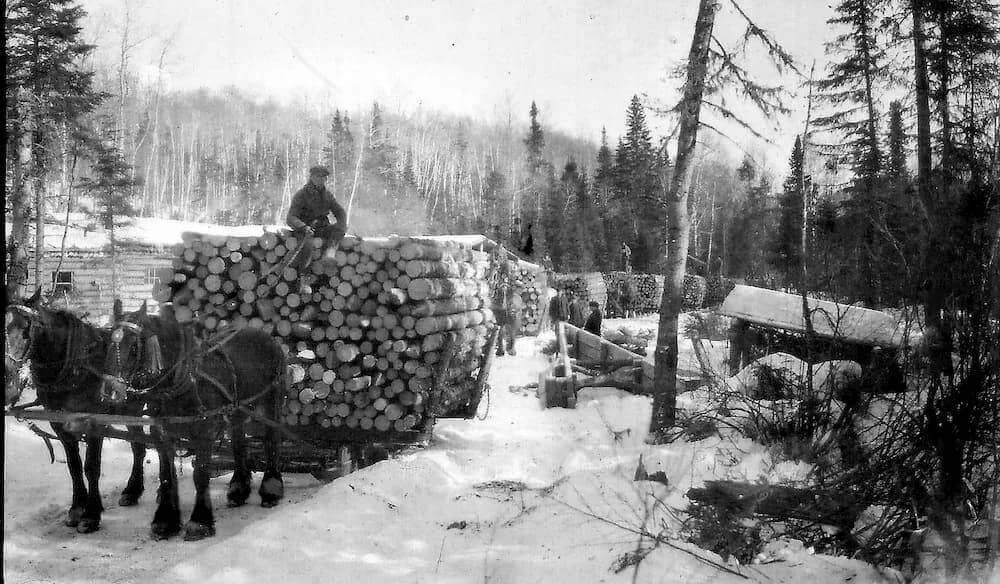
The North Shore logging camps
The restored photographs are accompanied by their original files, which can be viewed separately.